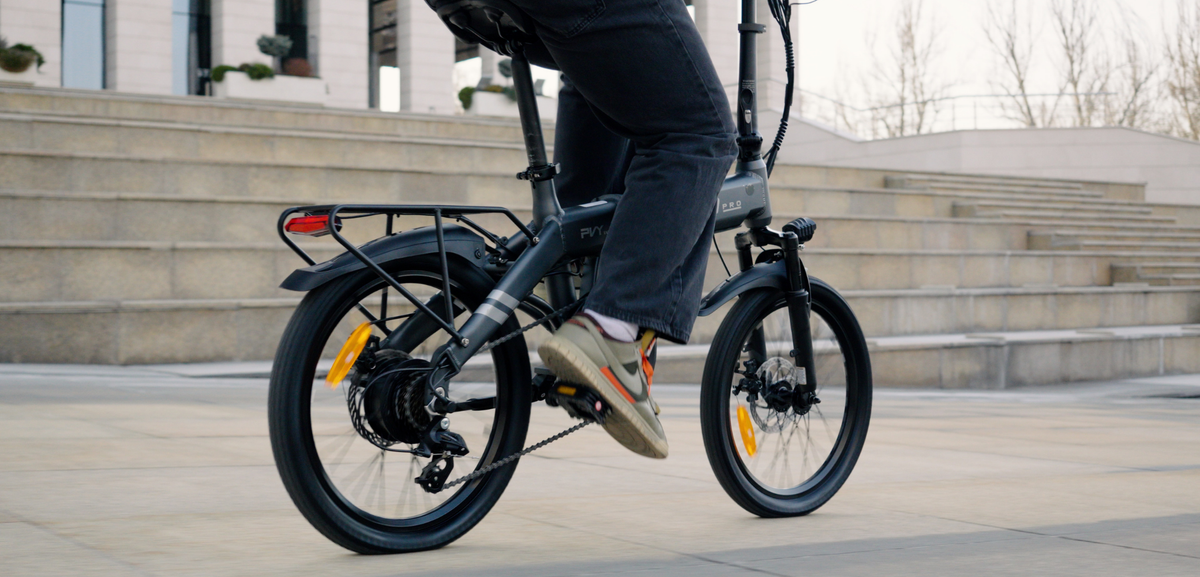
You just finished a great ride—maybe your first real one on your new e-bike. You’re proud, you’re energized, and then you try to walk up the front steps. Your legs feel like cooked spaghetti. Wobbly. Weak. Almost useless.
That “jelly legs” sensation is completely normal, especially for new riders. It’s not a sign of injury or that you’re out of shape. It’s your body’s honest response to a new kind of effort.
{"height":8,"color":{"hue":213,"brightness":0.83,"saturation":1,"alpha":0},"hidden":false,"locked":false,"blockName":"Spacer"}
Let’s break down why it happens and—more importantly—how to recover faster so you can enjoy your next ride even more.
{"height":8,"color":{"hue":213,"brightness":0.83,"saturation":1,"alpha":0},"hidden":false,"locked":false,"blockName":"Spacer"}
Why Do Your Legs Feel Like Jelly?
{"height":8,"color":{"hue":213,"brightness":0.83,"saturation":1,"alpha":0},"hidden":false,"locked":false,"blockName":"Spacer"}
Even with pedal assist, cycling uses muscles in ways that daily life doesn’t. Here’s what’s going on inside those shaking quads.
{"height":8,"color":{"hue":213,"brightness":0.83,"saturation":1,"alpha":0},"hidden":false,"locked":false,"blockName":"Spacer"}
1. Novel Muscle Recruitment
{"height":8,"color":{"hue":213,"brightness":0.83,"saturation":1,"alpha":0},"hidden":false,"locked":false,"blockName":"Spacer"}
Your legs have done plenty of walking and stair climbing. But cycling—especially sustained pedaling—engages the quadriceps, hamstrings, glutes, and calves in a coordinated, repetitive pattern. If you haven’t cycled regularly, those muscle fibers are suddenly working in an unfamiliar way. The “jelly” feeling is simply muscle fatigue from new demands.
{"height":8,"color":{"hue":213,"brightness":0.83,"saturation":1,"alpha":0},"hidden":false,"locked":false,"blockName":"Spacer"}
2. Lactic Acid Build-Up (The Burning Truth)
{"height":8,"color":{"hue":213,"brightness":0.83,"saturation":1,"alpha":0},"hidden":false,"locked":false,"blockName":"Spacer"}
When you push harder than your aerobic system can handle, your muscles produce energy anaerobically, creating lactic acid as a byproduct. That’s the burn you feel during a steep climb or a sprint. After you stop, the lingering fatigue and weakness can feel like jelly. The good news: lactic acid clears within an hour or two. It’s not the main cause of next-day soreness.
{"height":8,"color":{"hue":213,"brightness":0.83,"saturation":1,"alpha":0},"hidden":false,"locked":false,"blockName":"Spacer"}
3. Depleted Energy Stores
{"height":8,"color":{"hue":213,"brightness":0.83,"saturation":1,"alpha":0},"hidden":false,"locked":false,"blockName":"Spacer"}
Your muscles run on glycogen (stored carbohydrates). A longer or more intense ride can drain those stores, leaving muscles without their primary fuel. They feel weak and “empty” until you refuel.
{"height":8,"color":{"hue":213,"brightness":0.83,"saturation":1,"alpha":0},"hidden":false,"locked":false,"blockName":"Spacer"}
4. Neuromuscular Fatigue
{"height":8,"color":{"hue":213,"brightness":0.83,"saturation":1,"alpha":0},"hidden":false,"locked":false,"blockName":"Spacer"}
Your brain sends signals to your muscles to contract. After heavy use, the connection can become less efficient. Your legs still want to move, but the signals are tired. That disconnect feels like jelly.
{"height":8,"color":{"hue":213,"brightness":0.83,"saturation":1,"alpha":0},"hidden":false,"locked":false,"blockName":"Spacer"}
Immediate Post-Ride Recovery (The First Hour)
{"height":8,"color":{"hue":213,"brightness":0.83,"saturation":1,"alpha":0},"hidden":false,"locked":false,"blockName":"Spacer"}
What you do right after dismounting makes a huge difference.
{"height":8,"color":{"hue":213,"brightness":0.83,"saturation":1,"alpha":0},"hidden":false,"locked":false,"blockName":"Spacer"}
1. Cool Down, Don’t Collapse
{"height":8,"color":{"hue":213,"brightness":0.83,"saturation":1,"alpha":0},"hidden":false,"locked":false,"blockName":"Spacer"}
Resist the urge to flop onto the couch. Walk around for 5–10 minutes. Gentle movement helps flush metabolic waste and gradually lowers your heart rate.
{"height":8,"color":{"hue":213,"brightness":0.83,"saturation":1,"alpha":0},"hidden":false,"locked":false,"blockName":"Spacer"}
2. Stretch Lightly
{"height":8,"color":{"hue":213,"brightness":0.83,"saturation":1,"alpha":0},"hidden":false,"locked":false,"blockName":"Spacer"}
Hold each stretch for 15–30 seconds—no bouncing.
{"height":8,"color":{"hue":213,"brightness":0.83,"saturation":1,"alpha":0},"hidden":false,"locked":false,"blockName":"Spacer"}
* Quad stretch: Pull heel toward glute.
{"height":8,"color":{"hue":213,"brightness":0.83,"saturation":1,"alpha":0},"hidden":false,"locked":false,"blockName":"Spacer"}
* Hamstring stretch: Straight leg, reach for toes.
{"height":8,"color":{"hue":213,"brightness":0.83,"saturation":1,"alpha":0},"hidden":false,"locked":false,"blockName":"Spacer"}
* Calf stretch: Step one foot back, press heel down.
{"height":8,"color":{"hue":213,"brightness":0.83,"saturation":1,"alpha":0},"hidden":false,"locked":false,"blockName":"Spacer"}
3. Rehydrate
{"height":8,"color":{"hue":213,"brightness":0.83,"saturation":1,"alpha":0},"hidden":false,"locked":false,"blockName":"Spacer"}
You lost fluids through sweat, even on a cool day. Drink water. If the ride was long or sweaty, add electrolytes (sports drink or tablets).
{"height":8,"color":{"hue":213,"brightness":0.83,"saturation":1,"alpha":0},"hidden":false,"locked":false,"blockName":"Spacer"}
4. Refuel Within 30–60 Minutes
{"height":8,"color":{"hue":213,"brightness":0.83,"saturation":1,"alpha":0},"hidden":false,"locked":false,"blockName":"Spacer"}
Your muscles are most receptive to rebuilding right after exercise. Aim for a mix of protein (repair) and carbohydrates (restore glycogen).
{"height":8,"color":{"hue":213,"brightness":0.83,"saturation":1,"alpha":0},"hidden":false,"locked":false,"blockName":"Spacer"}
* Chocolate milk
{"height":8,"color":{"hue":213,"brightness":0.83,"saturation":1,"alpha":0},"hidden":false,"locked":false,"blockName":"Spacer"}
* Banana with peanut butter
{"height":8,"color":{"hue":213,"brightness":0.83,"saturation":1,"alpha":0},"hidden":false,"locked":false,"blockName":"Spacer"}
* Greek yogurt with berries
{"height":8,"color":{"hue":213,"brightness":0.83,"saturation":1,"alpha":0},"hidden":false,"locked":false,"blockName":"Spacer"}
* Protein shake
{"height":8,"color":{"hue":213,"brightness":0.83,"saturation":1,"alpha":0},"hidden":false,"locked":false,"blockName":"Spacer"}
{"height":8,"color":{"hue":213,"brightness":0.83,"saturation":1,"alpha":0},"hidden":false,"locked":false,"blockName":"Spacer"}
The Rest of the Day: Active Recovery
{"height":8,"color":{"hue":213,"brightness":0.83,"saturation":1,"alpha":0},"hidden":false,"locked":false,"blockName":"Spacer"}
1. Gentle Movement
{"height":8,"color":{"hue":213,"brightness":0.83,"saturation":1,"alpha":0},"hidden":false,"locked":false,"blockName":"Spacer"}
A slow walk, easy stretching, or even light household chores keeps blood flowing without fatiguing muscles further. Complete rest (sitting all day) can actually delay recovery.
{"height":8,"color":{"hue":213,"brightness":0.83,"saturation":1,"alpha":0},"hidden":false,"locked":false,"blockName":"Spacer"}
2. Elevate Your Legs
{"height":8,"color":{"hue":213,"brightness":0.83,"saturation":1,"alpha":0},"hidden":false,"locked":false,"blockName":"Spacer"}
If your legs feel swollen or heavy, prop them up on a pillow while lying down. This encourages fluid drainage.
{"height":8,"color":{"hue":213,"brightness":0.83,"saturation":1,"alpha":0},"hidden":false,"locked":false,"blockName":"Spacer"}
3. Foam Rolling (If You Have One)
{"height":8,"color":{"hue":213,"brightness":0.83,"saturation":1,"alpha":0},"hidden":false,"locked":false,"blockName":"Spacer"}
Gentle rolling over quads, hamstrings, and calves can release tension. Avoid rolling directly over joints or sharp pain.
{"height":8,"color":{"hue":213,"brightness":0.83,"saturation":1,"alpha":0},"hidden":false,"locked":false,"blockName":"Spacer"}
4. Warm Bath or Contrast Shower
{"height":8,"color":{"hue":213,"brightness":0.83,"saturation":1,"alpha":0},"hidden":false,"locked":false,"blockName":"Spacer"}
A warm bath relaxes muscles. Some athletes swear by contrast therapy (alternating warm and cold water) to reduce inflammation. For most new riders, a simple warm soak is plenty.
{"height":8,"color":{"hue":213,"brightness":0.83,"saturation":1,"alpha":0},"hidden":false,"locked":false,"blockName":"Spacer"}
Tomorrow and Beyond: Long-Term Adaptation
{"height":8,"color":{"hue":213,"brightness":0.83,"saturation":1,"alpha":0},"hidden":false,"locked":false,"blockName":"Spacer"}
The jelly legs won’t last forever. With consistent riding, your muscles adapt.
{"height":8,"color":{"hue":213,"brightness":0.83,"saturation":1,"alpha":0},"hidden":false,"locked":false,"blockName":"Spacer"}
1. Gradually Increase Ride Length
{"height":8,"color":{"hue":213,"brightness":0.83,"saturation":1,"alpha":0},"hidden":false,"locked":false,"blockName":"Spacer"}
Don’t go from 5 miles to 25 miles in one week. Add 10–20% distance or time each week. Your legs need time to build endurance.
{"height":8,"color":{"hue":213,"brightness":0.83,"saturation":1,"alpha":0},"hidden":false,"locked":false,"blockName":"Spacer"}
2. Listen to Your Body
{"height":8,"color":{"hue":213,"brightness":0.83,"saturation":1,"alpha":0},"hidden":false,"locked":false,"blockName":"Spacer"}
A little soreness (“I feel my workout”) is fine. Sharp pain or persistent weakness past 48 hours may mean you overdid it. Take an extra rest day.
{"height":8,"color":{"hue":213,"brightness":0.83,"saturation":1,"alpha":0},"hidden":false,"locked":false,"blockName":"Spacer"}
3. Strengthen Off the Bike
{"height":8,"color":{"hue":213,"brightness":0.83,"saturation":1,"alpha":0},"hidden":false,"locked":false,"blockName":"Spacer"}
Simple bodyweight exercises (squats, lunges, step-ups) twice a week make your legs more resilient to cycling fatigue.
{"height":8,"color":{"hue":213,"brightness":0.83,"saturation":1,"alpha":0},"hidden":false,"locked":false,"blockName":"Spacer"}
4. Prioritize Sleep
{"height":8,"color":{"hue":213,"brightness":0.83,"saturation":1,"alpha":0},"hidden":false,"locked":false,"blockName":"Spacer"}
Muscle repair happens during deep sleep. Aim for 7–9 hours, especially after a hard ride.
{"height":8,"color":{"hue":213,"brightness":0.83,"saturation":1,"alpha":0},"hidden":false,"locked":false,"blockName":"Spacer"}
{"height":8,"color":{"hue":213,"brightness":0.83,"saturation":1,"alpha":0},"hidden":false,"locked":false,"blockName":"Spacer"}
What About E-Bike Specifics?
{"height":8,"color":{"hue":213,"brightness":0.83,"saturation":1,"alpha":0},"hidden":false,"locked":false,"blockName":"Spacer"}
You might think: “But I have pedal assist—why am I still sore?”
{"height":8,"color":{"hue":213,"brightness":0.83,"saturation":1,"alpha":0},"hidden":false,"locked":false,"blockName":"Spacer"}
Even with assist, you’re still pedaling. The motor reduces effort, but it doesn’t eliminate muscle engagement. In fact, many new e-bike riders ride longer than they would on a regular bike, leading to unfamiliar endurance demands. That’s a good thing—it means you’re building fitness without the intimidation of hills.
{"height":8,"color":{"hue":213,"brightness":0.83,"saturation":1,"alpha":0},"hidden":false,"locked":false,"blockName":"Spacer"}
If your legs feel like jelly after an e-bike ride, it’s a sign you worked them. Celebrate it.
{"height":8,"color":{"hue":213,"brightness":0.83,"saturation":1,"alpha":0},"hidden":false,"locked":false,"blockName":"Spacer"}
When to Worry (Very Rare)
{"height":8,"color":{"hue":213,"brightness":0.83,"saturation":1,"alpha":0},"hidden":false,"locked":false,"blockName":"Spacer"}
Normal jelly legs go away within a few hours to a day. See a doctor if you experience:
{"height":8,"color":{"hue":213,"brightness":0.83,"saturation":1,"alpha":0},"hidden":false,"locked":false,"blockName":"Spacer"}
Severe, persistent pain (not just soreness)
{"height":8,"color":{"hue":213,"brightness":0.83,"saturation":1,"alpha":0},"hidden":false,"locked":false,"blockName":"Spacer"}
Dark brown or “coke-colored” urine (possible rhabdomyolysis)
{"height":8,"color":{"hue":213,"brightness":0.83,"saturation":1,"alpha":0},"hidden":false,"locked":false,"blockName":"Spacer"}
Swelling that doesn’t go down with elevation
{"height":8,"color":{"hue":213,"brightness":0.83,"saturation":1,"alpha":0},"hidden":false,"locked":false,"blockName":"Spacer"}
Inability to bear weight
{"height":8,"color":{"hue":213,"brightness":0.83,"saturation":1,"alpha":0},"hidden":false,"locked":false,"blockName":"Spacer"}
For 99% of new riders, jelly legs are just a sign of a good ride.
{"height":8,"color":{"hue":213,"brightness":0.83,"saturation":1,"alpha":0},"hidden":false,"locked":false,"blockName":"Spacer"}
Final Encouragement
{"height":8,"color":{"hue":213,"brightness":0.83,"saturation":1,"alpha":0},"hidden":false,"locked":false,"blockName":"Spacer"}
That wobbly feeling when you first step off your bike? It’s not weakness. It’s proof that you pushed beyond your comfort zone. Every ride makes your legs stronger, more efficient, and less prone to jelly.
{"height":8,"color":{"hue":213,"brightness":0.83,"saturation":1,"alpha":0},"hidden":false,"locked":false,"blockName":"Spacer"}
So stretch, hydrate, refuel, and rest. Then get back on that saddle. Your legs will thank you—eventually.